Dizziness, Dysautonomia and Acupuncture: Understanding the Nervous System Connection
How acupuncture on the Gold Coast may support people experiencing dizziness, vertigo and autonomic nervous system dysfunction.
Dizziness is a common but often misunderstood symptom. For some people, it feels like the room is spinning; it can also be a sensation of light-headedness, unsteadiness, floating or feeling as though they might faint. These symptoms can occur occasionally or become persistent enough to interfere with work, exercise, concentration and everyday activities.
While dizziness is commonly associated with inner-ear disorders, it can also be connected to changes in blood pressure, circulation, inflammation, neurological function and the autonomic nervous system.
At Haynes Acupuncture on the Gold Coast, we regularly see patients experiencing dizziness alongside complex chronic conditions such as Postural Orthostatic Tachycardia Syndrome (POTS), Myalgic Encephalomyelitis/Chronic Fatigue Syndrome (ME/CFS), Fibromyalgia (FMS), Mast Cell Activation Syndrome (MCAS) and Long COVID.
One area of particular interest is the relationship between dizziness, autonomic nervous system regulation and Heart Rate Variability (HRV), including emerging research examining whether acupuncture can influence these physiological processes.
What Causes Dizziness?
Dizziness is not a diagnosis itself but a symptom that can arise from several different physiological systems.
The brain relies on information from the inner ear, eyes, muscles and joints to maintain balance. The cardiovascular and autonomic nervous systems must continuously adjust blood pressure, heart rate, and circulation to maintain adequate blood flow to the brain.
Disruption in any of these systems can contribute to dizziness.
Common causes include:
- Vestibular disorders: Inner-ear conditions such as benign paroxysmal positional vertigo (BPPV), vestibular neuritis and Ménière’s disease.
- Autonomic dysfunction: Difficulty regulating blood pressure and heart rate, particularly when changing position.
- Circulatory changes: Orthostatic hypotension, dehydration and reduced circulating blood volume.
- Neurological conditions: Vestibular migraine and disorders affecting sensory processing and balance.
- Medication effects: Some medications can influence blood pressure, heart rate or vestibular function.
- Other medical conditions: Anaemia, iron deficiency and metabolic or endocrine disorders.
- Musculoskeletal – tight muscles and tendons around the neck and shoulders pulling on C1/2 vertebrae
Understanding which system contributes to dizziness matters because treatment approaches can differ.
The Link Between Dizziness and the Autonomic Nervous System
The autonomic nervous system (ANS) controls numerous bodily activities involuntarily, including heart rate, blood pressure, digestion, body temperature control, and vasomotor reactions.
There are two main branches of the NS:
The sympathetic nervous system helps maintain vigilance and supports cardiovascular adaptations to stress and exertion. The sympathetic system raises heart rate and helps regulate vascular resistance when the body needs more circulatory output.
The parasympathetic nervous system supports recovery, regeneration and digestion and slows heart rate through vagal tone.
Both systems operate simultaneously rather than like an on-and-off switch.
When you stand up, gravity moves blood volume toward the lower body. Normally, the ANS quickly adjusts blood vessel tone and heart rate to preserve blood pressure and adequate brain perfusion.
Autonomic dysfunction can cause improper or overly intense reactions to these stimuli, resulting in symptoms such as dizziness, lightheadedness, palpitations, and tiredness.
Heart Foundation+1
Dizziness in POTS, Chronic Fatigue, Fibromyalgia and MCAS
POTS (Postural Orthostatic Tachycardia Syndrome)
POTS is a form of dysautonomia characterised by an excessive increase in heart rate upon standing, accompanied by symptoms of orthostatic intolerance.
People with POTS often experience dizziness, rapid heart rate, fatigue, brain fog, nausea, exercise intolerance and sensations of near-fainting. Dizziness in POTS frequently worsens during prolonged standing, hot weather, dehydration or after meals.
Heart Foundation
ME/CFS (Myalgic Encephalomyelitis/Chronic Fatigue Syndrome)
Dizziness is also common in people living with ME/CFS.
Many patients experience orthostatic intolerance, meaning their symptoms worsen when sitting or standing upright and improve when lying down. Dizziness is most apparent during post-exertional malaise (PEM), when physical and mental exertion aggravates symptoms.
In these cases, dizziness is usually only one part of a much larger syndrome that involves exhaustion, poor sleep, cognitive problems, and difficulty exercising.
Fibromyalgia (FMS)
Fibromyalgia is generally associated with widespread pain, fatigue, sleep disturbance and increased sensitivity to sensory stimuli. However, some patients also experience dizziness and balance disturbances.
Fibromyalgia is linked with altered autonomic function, specifically alterations in heart-rate responses.
In addition, some individuals have overlapping conditions like POTS or orthostatic hypotension that could lead to their dizziness. Other possible contributing factors include altered sensory processing, vestibular migraine, medications, and insufficient sleep.
MCAS (Mast Cell Activation Syndrome) and Histamine
Mast cells are immune cells involved in allergic responses, inflammation and tissue signalling. When activated, they release chemical mediators, including histamine. Histamine has several important physiological effects, including changes in blood vessel diameter and vascular permeability.
During flaring of mast-cell activation, these effects can contribute to flushing, changes in blood pressure, palpitations and light-headedness.
Some people with MCAS also experience POTS-like symptoms or have a coexisting diagnosis of dysautonomia. The connection is complicated and remains an area of ongoing study. Not all dizziness involves histamine, and histamine intolerance is not synonymous with MCAS.
How Does Acupuncture Work for Dizziness?
Acupuncture involves inserting very fine needles into specific anatomical locations to stimulate sensory nerves and influence signalling within the peripheral and central nervous systems. Rather than viewing acupuncture as a therapy focused only on the inner ear, scientists have found that its benefits relate to multiple physiological mechanisms possibly involved in vertigo.
These mechanisms may involve autonomic nervous system function, pain perception, the senses, and even heart condition.
1. Influencing Sympathetic Nervous System Activity
One proposed mechanism involves acupuncture’s influence on autonomic pathways that regulate the body’s response to stress and changes in physiological demand.
Some experiments and clinical trials indicate that acupuncture can affect both the sympathetic and parasympathetic systems.
It does not imply that acupuncture will turn off the sympathetic nervous system. Both sympathetic and parasympathetic responses are essential for normal cardiovascular function.
2. Supporting Parasympathetic and Vagal Regulation
The vagus nerve is a major component of the parasympathetic nervous system and plays an important role in controlling heart rate and communicating information between internal organs and the brain. Research suggests certain forms of acupuncture may influence neural pathways involved in autonomic control. Researchers are investigating changes in vagally mediated cardiac activity as a mechanism.
3. Modulating Pain and Sensory Processing
The brain constantly processes information from various senses in order to maintain balance and spatial orientation.
When sensory processing is disturbed, patients often show an increased reaction to motion, visual stimuli, or positional change. Researchers have studied acupuncture for its effects on neurological and pain-processing pathways. This effect may apply to patients experiencing dizziness alongside migraine, neck pain, or central sensitisation.
Heart Rate Variability (HRV): Measuring Autonomic Nervous System Regulation
Heart Rate Variability, commonly referred to as HRV, is an increasingly important measurement in research into autonomic dysfunction, chronic fatigue and cardiovascular health. HRV measures the variation between heartbeats.
While the average heart rate may be around 70 beats per minute, the gap between beats varies from one to the next. This variability exists because the cardiovascular system changes with various physiological demands, such as breathing, physical exertion, and postural changes.
HRV depends heavily on parasympathetic activity; however, many other factors influence each individual HRV measurement.
Generally, higher resting HRV indicates greater cardiac adaptability in a healthy population, while lower HRV occurs with illness, poor sleep habits, stress, and certain autonomic disorders.
How Acupuncture May Influence HRV
Research suggests acupuncture may influence HRV by affecting neural pathways involved in cardiovascular regulation. A 2025 systematic review and meta-analysis of 10 randomised controlled trials involving 744 participants investigated acupuncture’s effects on autonomic nervous system function.
The researchers found improvements in a measure of overall HRV known as SDNN (standard deviation of normal-to-normal heartbeat intervals). The results suggest a possible effect of acupuncture on cardiac autonomic control, but more research is needed to determine its practical importance.
Research Into Acupuncture, HRV and Chronic Fatigue
A 2025 randomised controlled study published in Complementary Therapies in Medicine investigated the effects of acupuncture and moxibustion on fatigue symptoms and HRV in patients with chronic fatigue syndrome. Researchers measured HRV before treatment and at several stages throughout the treatment period.
They reported that acupuncture was associated with more immediate changes in HRV. The study also observed improvements in fatigue symptoms.
This serves as an initial indication that acupuncture might be affecting the autonomic nervous system in individuals suffering from chronic fatigue, but it does not imply that acupuncture has corrected any autonomic dysfunction or even treated the cause of ME/CFS.
Can Acupuncture Reduce Dizziness?
Encouraging research has examined acupuncture for dizziness and vertigo, but the quality of the evidence depends heavily on the underlying condition.
One such study, published in 2026, included 66 randomised controlled trials with 5,797 patients diagnosed with cervicogenic vertigo. In this study, acupuncture treatments improved various clinical outcomes, especially when used with other techniques.
Our Approach: Kiiko Matsumoto Style Acupuncture
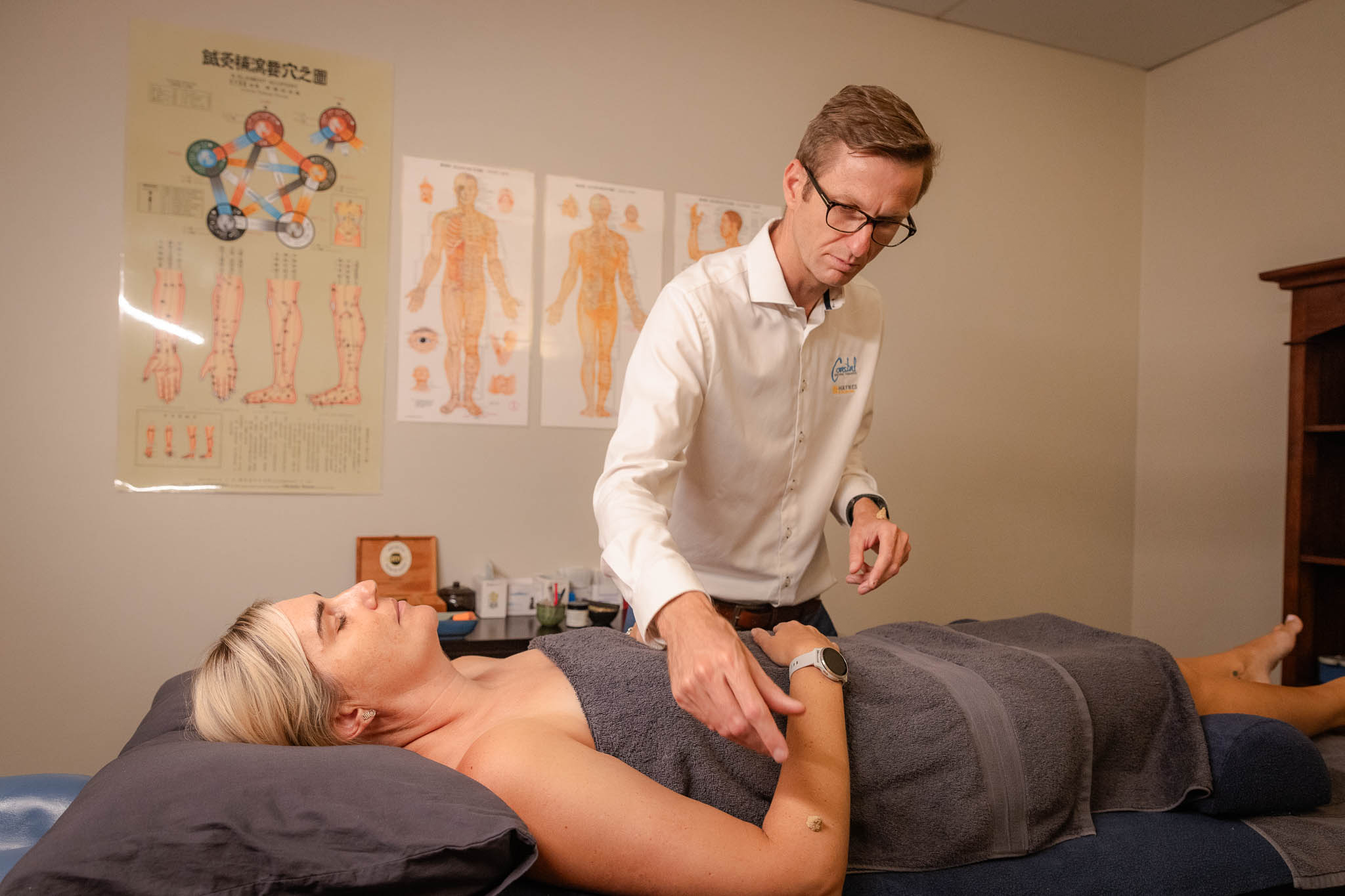
Haynes Acupuncture Gold Coast uses the Japanese acupuncture technique known as Kiiko Matsumoto Style Acupuncture, which includes taking a thorough medical history, palpation diagnosis, and needling.
Treatment methods use palpation to identify sensitive areas in the body and re-evaluate them after the session. It provides immediate information about local changes in tissue tenderness and sensitivity, which helps select specific points for needling.
In patients presenting with dizziness along with POTS, ME/CFS, fibromyalgia and MCAS, our approach involves looking at the entire picture instead of targeting only the symptom of dizziness. The treatment can include considerations for other symptoms like disturbed sleep, fatigue, headaches, neck pain, stress sensitivity, etc.
We also recognise that people with complex chronic illnesses may be particularly sensitive to physical stimulation. Treatments can be adapted using fewer needles, gentler stimulation and shorter sessions according to individual tolerance.
For people with ME/CFS, particular consideration is given to post-exertional malaise and the possibility of symptom exacerbation following treatment. Our aim is to provide individualised, supportive care alongside appropriate medical management.
The Bigger Picture: Looking Beyond Dizziness
Many people experience dizziness alongside other symptoms and as part of a more intricate relationship between cardiovascular function, neural activity, immune response, pain sensation, and underlying chronic disease. The association between POTS, ME/CFS, fibromyalgia and MCAS illustrates how essential it is to consider the autonomic nervous system when addressing dizziness.
Emerging evidence suggests acupuncture may affect the autonomic system and HRV. How effective this effect is in treating dizziness is still the subject of further investigation. At Haynes Acupuncture Gold Coast, we use Kiiko Matsumoto Style Acupuncture as an individualised complementary treatment method, alongside conventional medical care.
This approach focuses on understanding the clinical case rather than treating one symptom in isolation.
References and Further Reading
- Clinical efficacy and safety of acupuncture in modulating autonomic nervous function: A meta-analysis of randomised controlled trials (2025). PubMed research
- Li T. et al. (2025). Effects of acupuncture and moxibustion on heart rate variability in chronic fatigue syndrome patients. Complementary Therapies in Medicine. PubMed research
- Comparative effectiveness of acupuncture and Tuina for cervical vertigo: A systematic review and network meta-analysis (2026). PubMed research
- Heart Foundation Australia. Postural Orthostatic Tachycardia Syndrome (POTS). Clinical overview
- Centers for Disease Control and Prevention. Clinical Overview of ME/CFS. CDC clinical overview
- Guidelines for rigor and reproducibility of heart rate variability within human cardiovascular research (2026). HRV research guidelines

 Acupuncture for Anxiety & Stress Relief | Gold Coast By Mark Sargeant